A Student Project · English · 2026
From a nine-page whitepaper to a trillion-dollar revolution
Bitcoin is more than money — it is an idea. An idea that trust can be encoded in mathematics, that value can travel without banks, and that a network of strangers can agree on a single truth without any central authority. This is the story of how that idea changed the world.
On October 31, 2008, as global banks were collapsing under the weight of the financial crisis, a mysterious figure known only as Satoshi Nakamoto published a nine-page document to a cryptography mailing list. Its title was deceptively simple: "Bitcoin: A Peer-to-Peer Electronic Cash System."
The timing was not accidental. The world had just witnessed the catastrophic failure of trusted institutions — banks that gambled with ordinary people's savings, governments that printed money to bail them out. Nakamoto's paper proposed a radical alternative: a currency that required no trust in any institution at all, only trust in mathematics.
The core innovation was the blockchain — a shared, public ledger of every transaction, maintained not by a bank but by a global network of computers. Each block of transactions was cryptographically chained to the one before it, making the history effectively immutable. No single party could alter the record.
On January 3, 2009, Satoshi Nakamoto mined the very first Bitcoin block — known as the Genesis Block. Hidden inside its data was a headline from that day's Times newspaper: "Chancellor on brink of second bailout for banks." A timestamp. A message. A declaration of intent.
The first Bitcoin transaction occurred nine days later, on January 12, when Nakamoto sent 10 BTC to developer Hal Finney — one of the few people who had taken the project seriously from the start. Finney later recalled running the software on a cold winter morning, fascinated that he was holding what might one day become digital gold.
For most of 2009, Bitcoin had no monetary value whatsoever. It was a curiosity — a proof of concept discussed only in obscure cryptography forums. Yet the network kept growing, block by block, minute by minute, without interruption.
May 22, 2010 is now celebrated as Bitcoin Pizza Day. A programmer named Laszlo Hanyecz posted on a Bitcoin forum offering to pay 10,000 BTC for two pizzas. Someone accepted. The transaction was completed. For the first time, Bitcoin had a real-world exchange rate: roughly $0.0025 per coin.
Those same 10,000 BTC would later be worth hundreds of millions of dollars — making this perhaps the most expensive pizza purchase in history. But at the time, it was a monumental moment: proof that a decentralised currency could function in commerce.
Later that year, the first Bitcoin exchanges appeared. By October 2010, the price had climbed to $0.10. A small but real market was forming. Word spread through hacker communities. People began mining Bitcoin on their home computers, stacking coins that felt like digital curiosities — but ones with growing ambitions.
By early 2013, Bitcoin crossed $100 for the first time. Mainstream media took notice. Tech enthusiasts, libertarians, and speculators flooded in. The network processed transactions day and night, its blockchain growing one block every ten minutes.
Then Cyprus happened. When the European Union proposed seizing bank deposits to fund a financial bailout in March 2013, terrified Cypriots turned to Bitcoin. Within weeks, the price shot from $40 to over $260 before crashing back down. The world had seen for the first time that Bitcoin could function as a hedge against institutional failure.
By December 2013, the price had surged to $1,000. China accounted for most of the trading volume. Financial newspapers wrote breathless articles — some calling Bitcoin the future of money, others calling it a dangerous bubble. Both, in different ways, were right.
No year in Bitcoin's history captured the world's imagination quite like 2017. Starting at under $1,000 in January, the price climbed relentlessly through the year, carried by a wave of initial coin offerings, retail speculation, and mainstream curiosity.
By December, Bitcoin hit an all-time high of $19,783. Taxi drivers discussed mining strategies. Grandmothers asked their grandchildren how to buy cryptocurrency. The word "blockchain" entered everyday vocabulary. Wall Street banks that had dismissed Bitcoin for years quietly began building their own crypto desks.
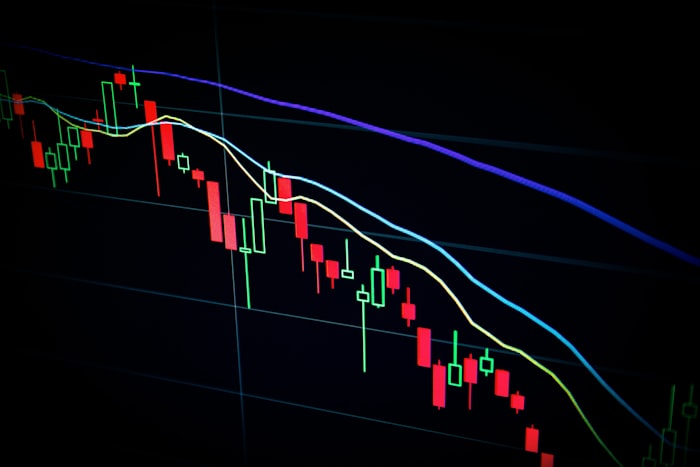
Then, as quickly as it had risen, the market collapsed. By December 2018, Bitcoin had fallen over 80% from its peak. Thousands of projects vanished. But the infrastructure — the exchanges, the wallets, the developer communities — remained. And the blockchain kept producing blocks, indifferent to the chaos above.
The 2020s marked a fundamental shift in Bitcoin's identity — from fringe experiment to institutional asset class. MicroStrategy, Tesla, and dozens of corporations added Bitcoin to their balance sheets. El Salvador became the first country to adopt it as legal tender in 2021.
In January 2024, the United States Securities and Exchange Commission approved the first spot Bitcoin ETFs — investment funds that track Bitcoin's price directly. Firms like BlackRock and Fidelity, managing trillions of dollars, entered the market. In its first week, the BlackRock ETF attracted over $1 billion in inflows.
The same year, Bitcoin's fourth halving occurred in April 2024, reducing the mining reward from 6.25 to 3.125 BTC per block. Halvings occur every 210,000 blocks — roughly every four years — and reduce the rate at which new Bitcoin is created, enforcing its hard cap of 21 million coins. Bitcoin's price surpassed its 2021 all-time high, crossing $73,000.